Tanneries and Tanyards
Directly south and east of Carpenters’ Hall the largely undeveloped center of the block was a center of the tanning industry in Colonial Philadelphia. Tanning, the treatment of animal hides into leather, a widely used material, was an important industry in the colonial economy. Animal hides were cleaned by hand and treated with a lime and water solution, calcium hydroxide, in large, sunken vats. Crushed tree barks containing tannin were added to large vats to cure the hides. The treated hides were then hung up to dry before being worked by the currier into pliable leather. The whole process was extremely odorous due to the decaying animals and chemical procedures as well as environmentally unfriendly due to the contaminated waste water. These negative factors did not go unnoticed along Dock Creek and neighborhood complaints led to one of America's first public health and environmental controversies. In 1739, neighbors of the tanyards led by Ben Franklin, fought against the noxious industry by petitioning the Pennsylvania Assembly for relief and to prohibit tanyards along the Dock creek. The debate, publicly promoted in Philadelphia's newspapers, brought into question the rights of the individual, in this case the tanners, versus the general public’s well-being. Unfortunately for Franklin and the neighborhood, the limited power of the Pennsylvania Assembly combined with the political influence of the wealthy tannery owners led to a governmental resolution that ruled in favor of the environmentalists but was not practiced and only illusory on its control of the tanneries.
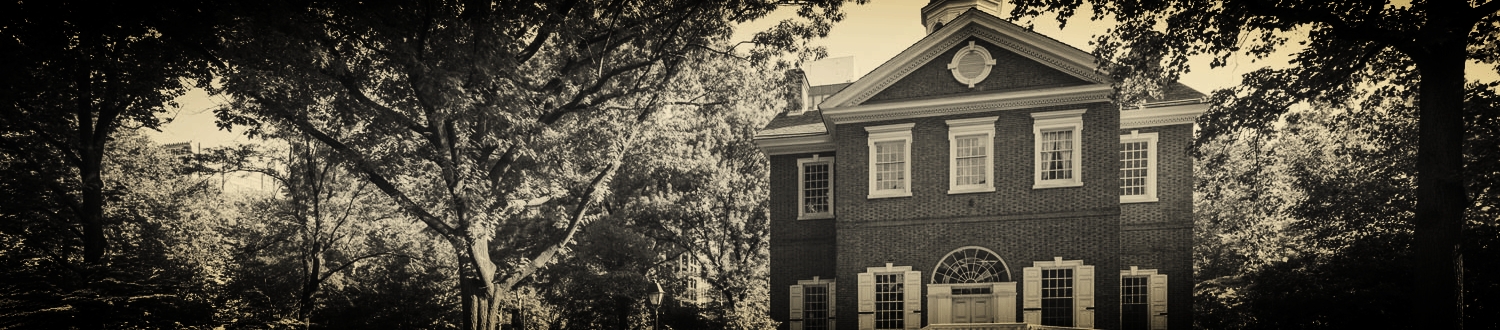
One can imagine that the tanning operations were a conspicuous part of the landscape of this block especially juxtaposed against the formal beauty of Clarke’s Hall and Pemberton’s gardens. In addition to the tanyards and tanning vats, tanning required many rough buildings such as bark mills, beam houses and currying shops. The Dock creek crossing third street above Walnut street and splitting into two streams, one heading north along Hudson’s Alley to Chestnut street and the other southwest towards the corner of fourth and Walnut provided a necessary water source for the tanyards. William Hudson, a Quaker tanner, emigrated to Philadelphia in 1683 and opened tanneries along this section of the Dock creek. He later served as Mayor of Philadelphia from 1725-1726 and on the Common Council. His power and political influence helped keep Franklin and the neighborhood’s environmentalists from controlling the polluting effects of his business. Franklin continued remediation attempts especially after the creek was blamed for a deadly Yellow Fever outbreak in 1741 but his plans were deemed too expensive. Hudson’s family continued to operate the tanneries until the dock creek became too putrid and unnavigable. Starting in 1765, portions of Dock creek were covered up and filled.